

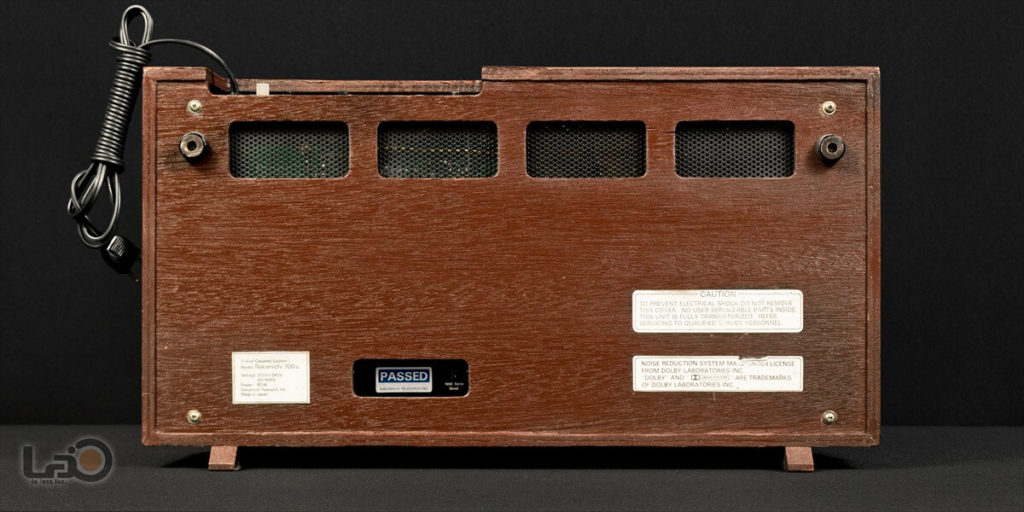


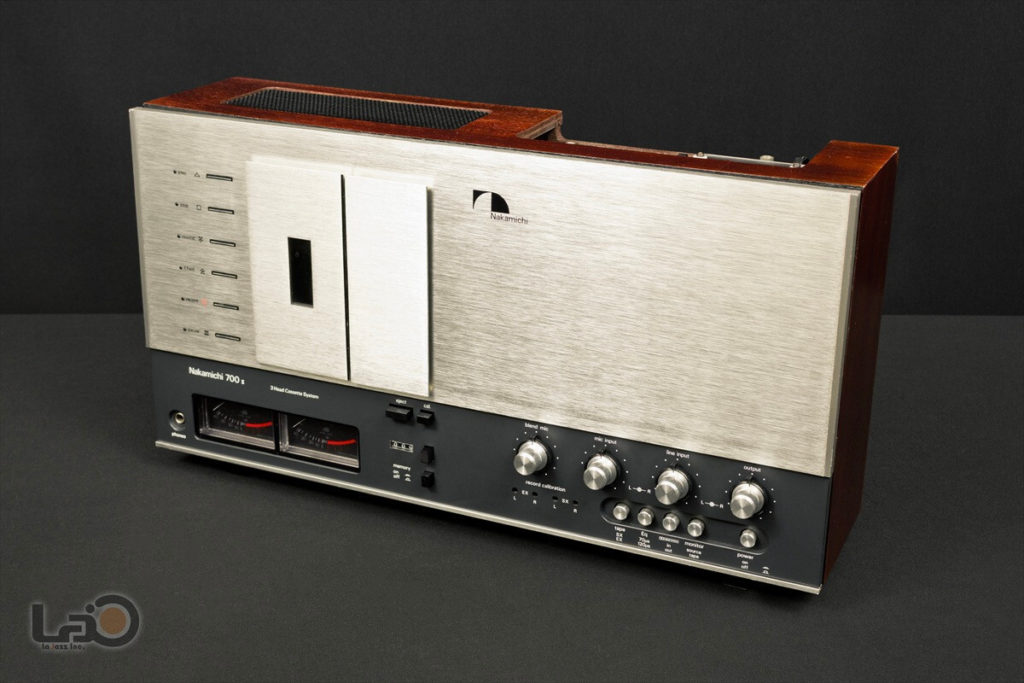



The Nakamichi 700 II is a high-end cassette deck developed by Japan’s prestigious audio manufacturer, Nakamichi, renowned in audio history. It uses a 3-head, 2-motor system. Released in 1977 as an improved model following the success of the original 700, it inherited the philosophy and technology of Nakamichi’s flagship “1000 Series” while offering a more compact and practical package.
With its simple yet refined exterior, 3-head configuration enabling monitoring, and Nakamichi’s unique precision mechanical design, it earned high praise from audiophiles and studio professionals of the time. Considered a pinnacle of analog recording/playback equipment, its build quality remains impressive today, making it a popular collector’s item.
Nakamichi began developing cassette decks in the early 1970s. Originally a precision audio manufacturer producing open-reel equipment and acoustic measuring devices, the company poured its expertise into the groundbreaking Nakamichi 1000 in 1973 — the world’s first 3-head cassette deck — which caused a sensation. The 700 series followed in its footsteps, with the 700 II serving as a “second flagship” aimed at bringing the 1000’s technology to a wider audience. Its circuit design and head quality were created without compromise, delivering performance that stood apart from other brands of the era. This model helped establish the foundation for Nakamichi’s rise as a world-class brand.
For a 1970s cassette deck, the sound quality of the Nakamichi 700 II was exceptionally high in detail and offered a natural tonal balance. The independent recording and playback heads in the 3-head configuration allowed for real-time monitoring during recording, enabling optimal bias and EQ adjustments for faithful sound transfer. The proprietary Discrete Head design and high-precision capstan mechanism ensured stable tape travel and minimized sound degradation. It also supports Dolby B and C noise reduction systems, reducing hiss without sacrificing detail. The depth of the soundstage, stereo separation, bass power, and overall imaging exceed what was thought possible with analog tape.
Despite being a vintage item, its cosmetic condition is excellent, as shown in the photos. It has undergone a full professional check, including capacitors, resistors, contact points, and connections.
Specifications:
Type: Stereo cassette deck (3-head, 2-motor system)
Head configuration: 1 × record head, 1 × playback head, 1 × erase head (all independent)
Motor configuration: 1 × capstan motor, 1 × reel motor (belt drive)
Frequency response: 20Hz–20kHz (Metal tape), maximum bandwidth reproduction
S/N ratio: Approx. 64dB (Dolby B), approx. 70dB (Dolby C)
Wow & flutter: 0.05% WRMS or less (extremely stable)
Compatible tape types: Normal (Type I), CrO₂ (Type II), Metal (Type IV)
Noise reduction: Dolby B / Dolby C (switchable)
Inputs: RCA line input, mic input (L/R independent)
Outputs: RCA line output, headphone jack
Calibration functions: Manual bias/EQ/level adjustment
Power supply: AC 100V–240V (varies by region)
Dimensions (main unit): 440mm (W) × 140mm (H) × 300mm (D)
Weight: Approx. 10kg