
[Overview]
■ A rare early Jim Lansing theatrical speaker system ■
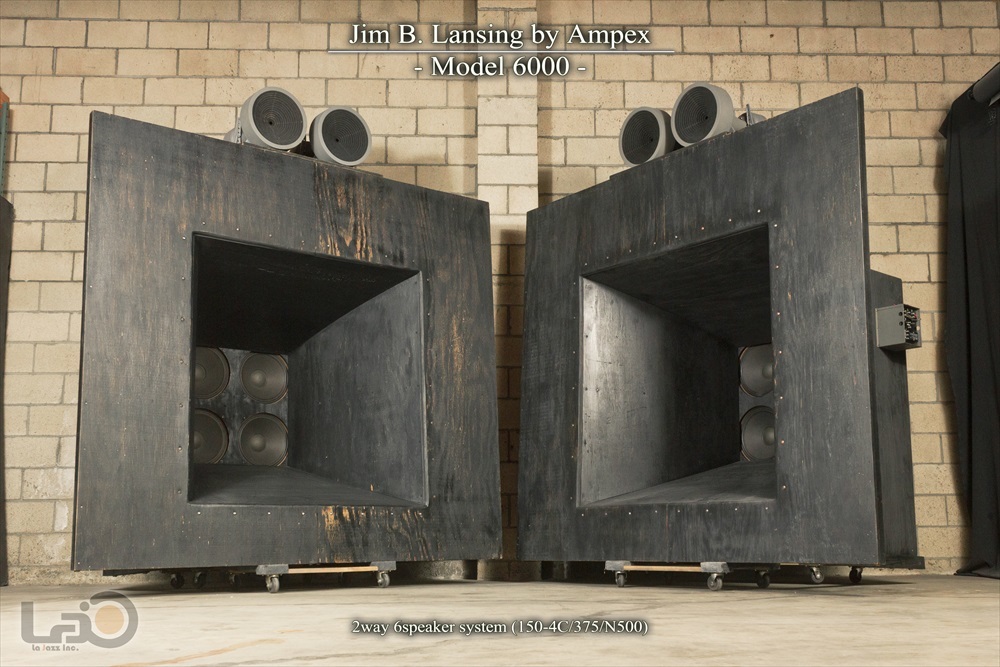
This item is a pair set of theater speaker systems housed in genuine JBL / AMPEX Model 6000 theater enclosures released by JBL around the 1940s. It is equipped with JBL’s flagship components that were used in many speaker systems, including the JBL 150-4C woofer, 375 driver, and the 537-500 extra-large “honeycomb” horn.
■ A cabinet jointly produced by Jim Lansing and the trusted AMPEX company ■
This model was conceived and built at Westrex, which at the time had been established as an outside production division of Western Electric, by John Frayne and Bart Locanthi, who later became a designer at JBL.
Afterward, Jim Lansing and Ampex jointly distributed it to theaters throughout the United States, making it a rare model that established a firm reputation as Jim Lansing’s first theater speaker system.
It is said to have been renowned for its meticulous craftsmanship, impressive enough to amaze Western executives and Mr. Lansing himself. This legendary cabinet offers an excellent balance between mid/high frequencies and low frequencies, with powerful deep bass that clearly sets it apart from other theater-spec models, along with a brilliant, finely textured sound.
Even after decades under the Los Angeles sun, it retains a tenacious, richly textured character, as though the necessary sense of “wetness” has soaked into the dry wood. The bass in particular feels truly exceptional. It is easy to understand why it is reportedly still in use in East Coast theaters even today.
■ Astonishing: a monster system loaded with eight 150-4C units and four 375 drivers ■
This item is an extraordinary monster system equipped with eight 150-4C 16Ω woofers, a model that was only standard in the Hartsfield and the earliest Paragon systems.
The 375 16Ω drivers are also early bubble-back gray models, and they are paired with JBL’s top-tier horn, the famous 537-500 “honeycomb” horn, with a lavish total of four units installed.
In addition, all units feature fat terminals, and the wax seals bear the early “L” mark, which further adds collectible value.
The network used is also a rare theater-tuned 500 network, which later became the prototype for the highly prized N500H. This is a rare network from an era before model numbers had yet been firmly standardized.
Because of its age, the exterior does show some paint peeling and scratches, giving it a well-used impression, but overall it remains in generally good condition, and the edges are in exceptionally fine condition. It is very clean, as can be judged from the photos, and as many images as possible have been included.
■ Sound quality ■
The sound image that gathers firmly at the center is superb, and perhaps because the crossover is around 400–500 Hz, the powerful output from the eight woofers emphasizes only the fundamental low frequencies without waste, producing extremely tight, beefy bass.
As expected from a system designed for use in theaters and halls, it is second to none in reproducing pipe organ and string instruments. Not only is the excellence of mono sources unmistakable, but even stereo imaging is expressed with surprising delicacy, which surely speaks to the brilliance of its design engineering.
The combination of the 150-4C and 375 is characterized by highly resolved, clearly defined sound.
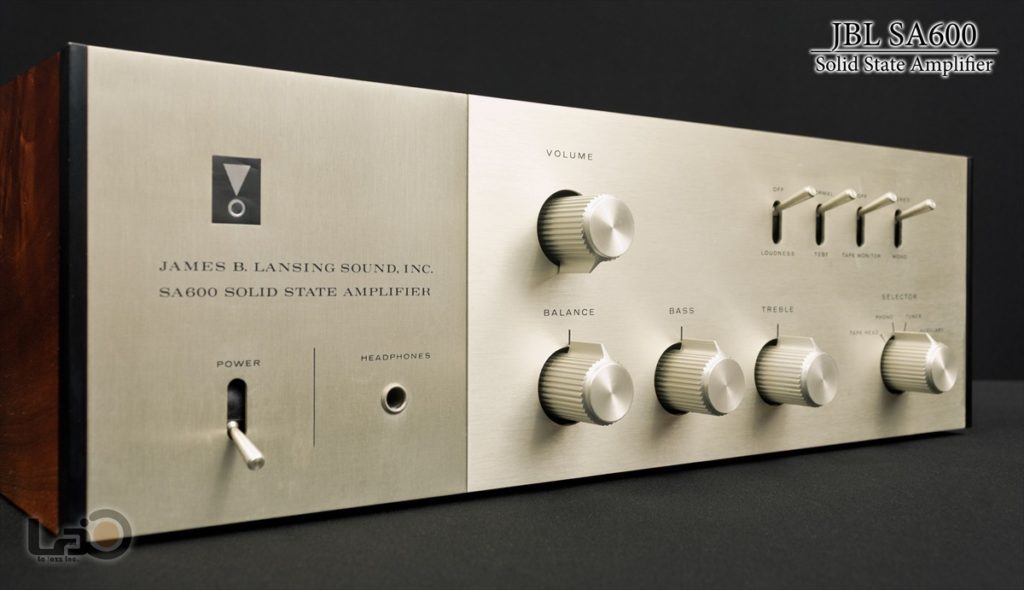
Put positively, it is simple; put negatively, it is a system that is selective about associated equipment. Considering system matching is part of the enjoyment, but being a JBL product, it felt especially compatible with equipment such as the SA600.
However, rather than making it sound too small and restrained with so-called template pairings such as the McIntosh 275, choosing something with higher efficiency and sound pressure, such as an Altec 1530T theater amplifier, would likely let you fully enjoy this system’s characteristics.
Many videos were taken this time, so please first experience its sound quality and sound pressure through the videos.
[Specifications]
【 150-4C 16Ω / many consecutive serial numbers and same-lot units 】
(Serial numbers: 10100 / 10101 / 10102 / 10104 / 10555 / 10556 / 10660 / 10661)
One of the finest woofer units in JBL history.
It is one of the early Signature Series models.
This legendary unit was used not only in the Paragon, but also in famous speakers such as the Hartsfield.
A highest-grade Alnico woofer well known for its excellent compatibility with the 375 driver.
Fat terminal specification.
The speaker cone paper and edges are both in good condition, with no sagging or hardening.
It is very clean, as can be judged from the photos.
【 375 / 537-500 horn 16Ω / many consecutive serial numbers and same-lot units 】
(Serial numbers: 1279 / 1283 / 1253 / 1254)
This is one of JBL’s early series and a top-grade driver unit associated with Mr. Lansing.
As already mentioned, it uses an excellent early model with the flat-screen specification.
It is very clean, as can be judged from the photos.
There is absolutely no damage to the throat.
A rare consecutively numbered matched pair.
Fat terminal / early wax seal specification.
Due to its age, the exterior has some minor paint loss and scratches and shows signs of use, but overall it remains in generally good condition.
[Enclosure Specifications]
Despite its age, not only the exterior but also the inside of the enclosure is in very good condition.
The enclosure, speaker cone paper, and edges are all in exceptionally fine condition.
It is very clean, as can be judged from the photos.
Many exterior photos have been included, so please check the condition carefully.
Type: 2-way, 6-speaker, floor-standing
Engraving: 1030 / 1035
Units used: 150-4C x8, 375 x4, 500 Network x2
Crossover frequency: 500 Hz
Size (per side): Width 2337 mm × Height 2489 mm (including horn) × Depth 1194 mm
Weight (per side): Approx. 300 kg
Total packaged weight (volumetric weight): 2300 kg